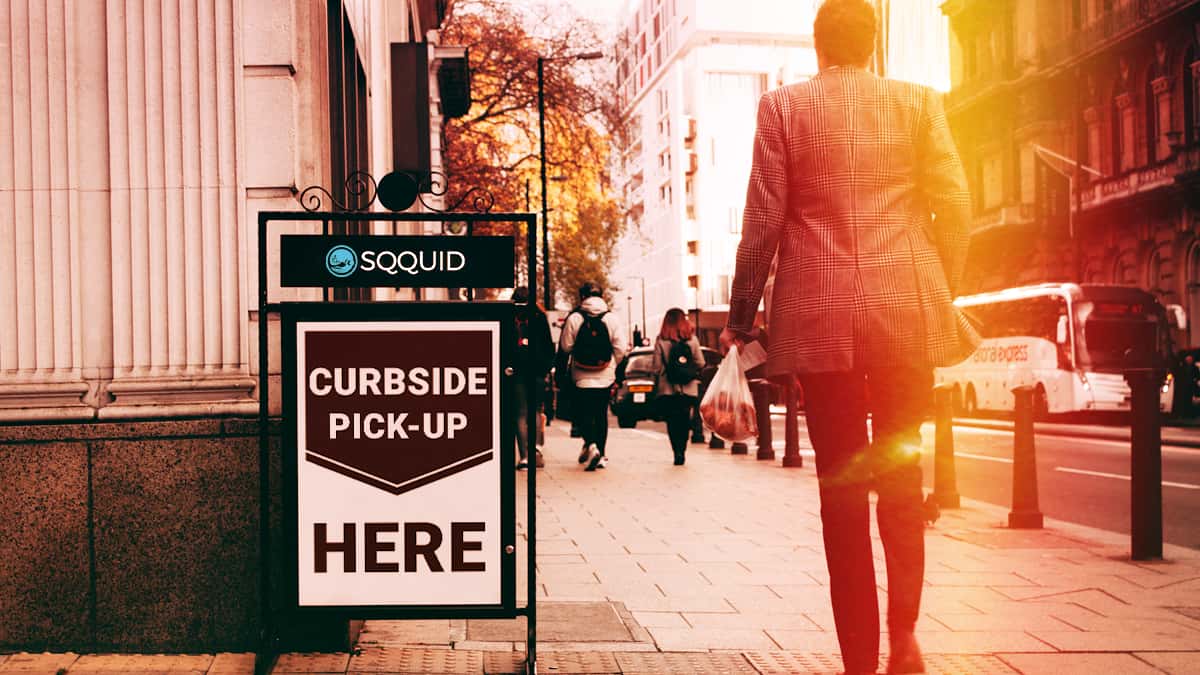
Curbside pickup is simple for shoppers but operationally demanding for retailers. The hard part is not the parking spot. It is making sure the item is really available, the right store receives the order, staff can pick and stage it quickly, and inventory stays accurate across ecommerce, POS, marketplaces, and store fulfillment workflows.
What is curbside pickup?
Curbside pickup is a retail fulfillment option that allows a customer to place an order online and collect it outside the store without going inside. Shopify has a current overview of how curbside pickup fits into modern retail operations in its step-by-step curbside pickup guide.
In practice, the customer places an order, the store prepares it, and the customer arrives at a designated pickup area where the order is handed off.
At a surface level, that sounds simple. But behind the scenes, curbside pickup requires the retailer to answer a few important questions correctly:
- Is the item really available at that location?
- Which store should fulfill the order?
- Is the order ready when the customer arrives?
- Does staff know exactly what to pick, stage, and hand off?
That is why curbside pickup works best when it is treated as part of a broader fulfillment process rather than as an isolated feature.
Retail operations check
Trying to make BOPIS and curbside pickup easier to scale?
Sqquid helps retailers coordinate pickup orders, store-level inventory, fulfillment routing, and connected channels from one retail operations layer.
Map your workflowWhy is curbside pickup still relevant today?
Customers now expect flexible fulfillment options. Many shoppers still want the speed of local pickup, the certainty of reserving an item online, and the convenience of avoiding shipping delays.
For retailers, curbside pickup can also support better economics when compared with shipping every small order to a home address. It can help reduce last-mile shipping costs, create faster handoff times, and make stores more useful as fulfillment nodes. The National Retail Federation has also highlighted how technology such as RFID helps improve BOPIS and curbside pickup efficiency as stores become more fulfillment-oriented in its article on RFID and the retail customer experience.
For specialty retailers in particular, curbside pickup remains relevant because it solves a real customer problem:
- the customer wants the item quickly
- the retailer wants to use store inventory more effectively
- the business wants to avoid unnecessary shipping costs
What is the difference between curbside pickup and in-store pickup?
The difference is straightforward:
- Curbside pickup means the customer stays outside and the order is brought to the car or pickup area.
- In-store pickup means the customer enters the store and retrieves the order inside.
From the customer’s perspective, both can feel similar because each starts with an online order and ends with a store pickup.
Operationally, though, curbside pickup can be more demanding. Staff may need to stage orders differently, monitor arrival timing, coordinate parking or pickup zones, and complete handoff without the customer ever entering the store. Walmart’s own pickup help documentation is a good real-world example of how structured check-in and curbside handoff workflows work at scale.
That means curbside pickup usually puts more pressure on store operations than a basic in-store pickup workflow.
How does curbside pickup complement online shopping?
Online shopping is not only about home delivery. Many customers want the convenience of buying online without waiting several days for a package.
Curbside pickup complements ecommerce by giving customers another way to complete the transaction:
- they can confirm availability before leaving home
- they can order on their own schedule
- they can get the item the same day in many cases
- they can avoid shipping fees and delivery uncertainty
For the retailer, curbside pickup helps bridge digital demand and physical store inventory. It turns the store into a more active part of the ecommerce experience.
This matters even more for multi-location retailers, where each store can function as both a selling location and a fulfillment asset.
Why do retailers offer curbside pickup?
Retailers usually adopt curbside pickup for a combination of customer-experience and operational reasons.
1. Faster customer access to products
Pickup is often faster than parcel delivery, especially when the item is already available locally.
2. Lower shipping pressure
Not every order needs to become a shipped order. Pickup can reduce shipping spend and lower the operational burden on back-of-store shipping teams.
3. Better use of store inventory
Instead of waiting for store inventory to sell only through foot traffic, retailers can expose that inventory online and let nearby customers claim it.
4. More fulfillment flexibility
Pickup gives retailers another path to fulfill orders during busy periods, local demand spikes, or shipping slowdowns.
5. Better customer choice
The strongest retailers do not force every customer into one fulfillment model. They offer options: shipping, in-store pickup, curbside pickup, and sometimes ship-to-store.
What are the logistical challenges of curbside pickup?
This is where many retailers struggle.
Curbside pickup often sounds easy from a marketing perspective, but operationally it can break down quickly when systems are not aligned.
Limited store readiness
Not every location is equally equipped for curbside pickup. Some stores have better access, more staff flexibility, or better parking arrangements than others.
Employee confusion
If pickup orders are managed manually, staff can lose time checking paper tickets, searching for items, or trying to figure out where the customer is waiting.
Order inaccuracies
The biggest issue is often not the curbside handoff itself. It is what happened earlier in the workflow. If inventory was wrong, the wrong location was chosen, or the order was staged incorrectly, the pickup experience is already at risk.
Weak inventory sync
Curbside pickup depends on accurate store-level inventory. If the website says an item is available but the shelf says otherwise, customer trust drops fast.
Manual routing decisions
For multi-location retail, someone has to decide which location should fulfill the order. If that logic is weak or manual, curbside pickup becomes inconsistent and harder to scale.
These are exactly the kinds of problems Sqquid is built to help retailers clean up: better inventory visibility, smarter order routing, and more reliable store fulfillment across connected systems.
Curbside pickup categories to know: BOPIS vs BOSS
Retailers often talk about curbside pickup as if it were a single workflow, but there are different fulfillment models behind it.
Two important ones are BOPIS and BOSS.
What is BOPIS in retail?
BOPIS stands for Buy Online, Pick Up In Store.
In a BOPIS workflow, the customer places an online order against inventory that is available at the pickup location or can be reserved there right away.
A simplified BOPIS flow looks like this:
- The customer places an online order
- The system identifies the correct pickup location
- Staff picks and stages the order
- The customer arrives and collects it in-store or curbside
BOPIS is often the fastest pickup option because the inventory is already at the store. When inventory accuracy is strong, BOPIS can be an excellent way to combine ecommerce convenience with local store fulfillment.
What is BOSS in retail?
BOSS stands for Buy Online, Ship to Store.
In a BOSS workflow, the customer still picks up the order at a store, but the item does not have to be fulfilled from that store’s current inventory. Instead, it can be sent from another store, warehouse, or distribution point before the customer is notified for pickup.
This gives the retailer more flexibility because the pickup location and the fulfillment source do not have to be the same.
For some businesses, BOSS is useful when:
- local store inventory is limited
- the retailer wants tighter control over store stock depletion
- a warehouse or another location is the better fulfillment source
- the business wants to offer pickup at more locations than it can fully stock
BOPIS vs BOSS: which is better?
Neither is universally better. It depends on the retailer’s operating model.
BOPIS is usually better when:
- the store already has the inventory
- the goal is speed and same-day pickup
- the retailer wants immediate local fulfillment
BOSS is usually better when:
- inventory is distributed unevenly
- the retailer wants more sourcing flexibility
- the pickup store is convenient for the customer but not the best source of stock
Many retailers end up needing both options over time.
Why curbside pickup can help retailers serve customers better
When the workflow is supported properly, curbside pickup can create meaningful benefits for both the customer and the retailer.
Reduced shipping costs
Not every order needs a shipping label. Pickup can reduce parcel volume and lower shipping spend, especially for local demand.
Better use of stores as fulfillment assets
Curbside pickup helps retailers use physical stores as part of the digital fulfillment network rather than treating stores and ecommerce as separate worlds.
Improved inventory visibility
A strong pickup workflow depends on better store-level inventory visibility. That same visibility can also improve ecommerce accuracy more broadly.
Faster fulfillment options
Customers appreciate speed. Pickup gives them another fast option without depending entirely on carrier timelines.
Stronger local customer experience
For many retailers, pickup is part of the brand experience. Customers want convenience, reliability, and confidence that the item will be ready.
Why curbside pickup still creates problems for retailers
Retailers do not usually fail at curbside pickup because the idea is wrong. They fail because the supporting systems are fragmented.
A few common examples:
- the ecommerce platform shows the wrong store availability
- orders do not flow cleanly into the store workflow
- staff do not have a simple way to find, stage, and complete pickup orders
- routing logic does not choose the best fulfillment location
- marketplaces and ecommerce channels create inventory pressure that spills into store pickup promises
That is why curbside pickup is often a signal of a broader operational problem. If pickup is messy, the retailer usually also has deeper issues around inventory sync, order flow, retail order routing, or channel coordination.
Why curbside pickup is here to stay
Curbside pickup has lasted because it solves real customer and retailer needs beyond any one moment in time.
It gives customers:
- faster access to products
- more flexibility in how they buy
- another option beyond standard shipping
It gives retailers:
- another fulfillment path
- better use of local inventory
- more ways to serve online demand from physical stores
As retail keeps moving toward more flexible fulfillment, curbside pickup remains one of several store-based workflows that help retailers compete more effectively.
Embracing curbside pickup today
If you want curbside pickup to work well, think beyond the parking spot.
A reliable pickup workflow usually depends on three things:
- A store network or pickup location that can actually support the process
- An ecommerce experience that correctly presents pickup options and availability
- An operating layer that keeps inventory, order flow, and store fulfillment aligned
That is where many growing retailers outgrow basic connectors and manual workflows.
Sqquid helps multi-location specialty retailers support BOPIS, curbside pickup, ship-to-store, ship-from-store fulfillment, and smarter order routing with better control across POS, ecommerce, marketplaces, and fulfillment.
If you are evaluating how to make pickup workflows cleaner and easier to scale, explore our integrations, learn more about shipping and fulfillment, see whether Sqquid fits your stack, or request a demo.